
Opinion
Social innovation
Societal readiness is redefining innovation in Europe

Silvia Agrafojo
Social Innovation Knowledge area leader
CLUSTERING OF PROJECTS
European project clusters increasingly rely on communication to build coherence
At a glance: the essentials of this article
European project clusters are becoming increasingly important in a research landscape shaped by complex challenges and shared ambitions. Yet their impact depends not only on thematic alignment or joint activities, but on the ability to build a coherent collective voice through communication.
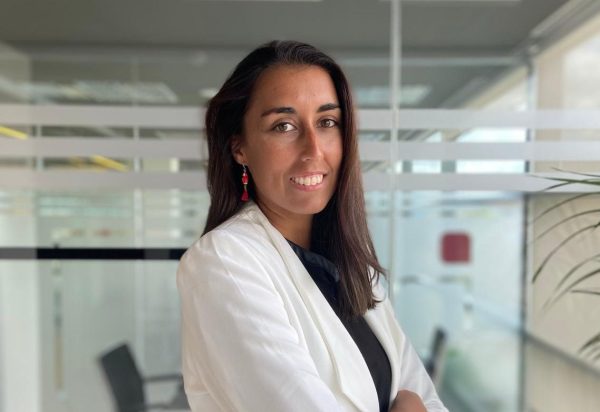
Leader of the Dissemination and Communication of European Projects area
Across Europe’s research landscape, projects rarely develop in isolation. They take shape and converge around shared ambitions. Clustering, in this sense, is nothing new: but an almost natural response to the growing complexity of the challenges they aim to address. And yet, more often than not, something essential is missing.
While projects are grouped together under common thematics, their voices remain dispersed, their stories fragmented. What should become a collective narrative too often dilutes into parallel conversations competing for the same audience.
Thematic and technological affinities may draw projects closer, but it is communication that binds them into a coherent whole. And ultimately, gives that unique voice.
EU project clustering aspires to more than proximity. It proposes a form of alignment, an effort to weave together knowledge, reduce fragmentation and extend individual results beyond the boundaries of a single project.
Within the European research landscape, this promise is particularly appealing: that through coordination, projects might not only coexist, but resonate more widely across policy, industry and society. Yet this promise does not materialise on its own.
It must be constructed, with patience and purpose, through a series of shared practices. Clusters take shape in the quiet recurrence of coordination meetings, in the gradual alignment of messages, in the common effort to speak together instead of side by side. They emerge through cooperative campaigns and collective moments of visibility (a webinar, a shared panel at a conference, a joint publication), where projects allow themselves to feel part of this broader narrative.
Even the more tangible formats, such as visual identities or common communication materials, play a part in acknowledging the cluster as a common shape. Over time, these gestures accumulate and what seemed a loose grouping, begins to take a shape recognised from outside.
And yet, even when these practices are in place, clustering does not always achieve the connexion it promises. The mechanisms exist, common activities progress, but still, something resists consolidation. Often communication remains anchored at the individual project level, bent by their timelines, their deliverables, their specific internal priorities.
Alignment is attempted, but not sustained. Collaboration occurs, but not translated into a shared voice. The result is a form of coexistence rather than convergence, where efforts accumulate without fully reinforcing one another.
At the heart of this matter lies a structural absence. Projects rarely have a clearly defined centre of gravity around which to orbit, a role responsible not only for coordination, but also for narrative direction.
Communication, in this sense, occupies an ambiguous space: essential to the success of the cluster, yet laying close to a form of supra-coordination without a formally recognised scope of responsibility. A role that demands time and continuity beyond the boundaries of individual projects, that risks being treated as an additional burden rather than a shared investment.
When this effort is collectively assumed, it consolidates. What is dispersed becomes aligned. What appears duplicated, is in fact, reduced.
Clustering does not become coherent just because projects collaborate. The activities are there: joint webinars, shared campaigns and common events, but on their own they do not necessarily connect. They create visibility, but not always continuity.
What is missing are not more actions, but the effort to link those over time. This requires time, and a level of attention that goes beyond the immediate responsibilities of each project.
At some point, someone needs to take care of that… Not in a formal sense, but in practice: following what others are doing, identifying connections, aligning messages, steering the rudder towards the same direction. Often this role ends up being assumed by communication teams working across projects, even if it is not explicitly defined as part of their role.
For this to work, communication should be part of the process and not brought in only as a last resort. This implies trust. Technical teams and partners need to be open to letting communication shape how things are presented collectively, as a joint effort, not only translating results once they are final.
In a context where collaboration is increasingly encouraged, clustering is likely to remain a defining feature of the European research landscape. The question then will not be whether initiatives should work together, but how closeness could be made meaningful during the projects’ timeline and beyond.
This does not follow automatically from shared objectives, nor from the multiplication of activities. The effort to connect, to align and to sustain a sense of direction is built in a continuous motion. After all, most initiatives were not originally designed to be grouped and function as one.
This is where communication takes on a different role. Not as a transversal layer, but as part of the process where results relate to one another, becoming something intentional, recognised, followed and understood. And it is perhaps at that point that clustering fulfils its promise: Not simply as a way of bringing projects together, but as a way of allowing them to speak.
Brussels Office
Leader of the Dissemination and Communication of European Projects area
Opinion
Social innovation
Silvia Agrafojo
Social Innovation Knowledge area leader

Opinion
Industry

Susana Garayoa
Head of Institutional Relations in Brussels

Opinion
Start-ups

Xabier Semperena
EU Finance Knowledge Area consultant

News
European Commission
The work programme includes measures to simplify regulations and strengthen security
Opinion
Social innovation
Silvia Agrafojo
Social Innovation Knowledge area leader

Publication
HORIZON EUROPE
In this document, our colleague Blanca Rodriguez shows us the keys to successfully writing a good Impact section.
The important thing is not to keep moving, but rather to know in which direction to go. Our 37% success rate proves that we know how to guide our clients.
