News
ROTATE
A more sustainable and committed mining model
ROTATE, a Horizon Europe funded project, focuses on social impact
Mining
Zabala Innovation is involved in three projects that are helping drive social acceptance of innovation across the mining industry
At a glance: the essentials of this article
Social acceptance has become a critical factor in the future of mining and critical raw materials. Beyond developing new technologies, the sector must understand the needs of local communities, engage stakeholders, and support workers in adopting innovation. Zabala Innovation brings this social perspective to European projects such as Digiecoquarry, Rotate and SCIMIN-CRM, helping integrate societal considerations into solutions for a more sustainable mining industry.
As Europe accelerates its transition towards a more sustainable economy, mining has returned to the centre of public debate. Securing a reliable supply of critical raw materials for technologies such as batteries, wind turbines and electric vehicles has renewed interest in mining activities. Alongside technological and environmental challenges, however, another issue has become increasingly important: the relationship between mining operations and the people who live and work around them.
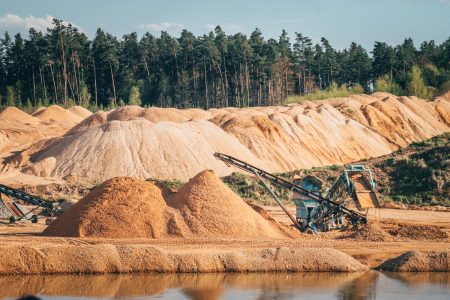
Mines and quarries often remain in the same location for decades. As cities expand and public expectations evolve, issues such as environmental impact, traffic, employment and transparency are becoming increasingly significant. As a result, social acceptance is now a strategic factor not only for launching new mining projects, but also for introducing innovation across the sector.
“Innovation has to address the concerns and expectations of the people it affects,” says Nahikari Diosdado, consultant in the Social Innovation area of European Projects at Zabala Innovation. “That’s why it’s essential to integrate the social dimension from the very beginning of a project and create opportunities for meaningful dialogue with all stakeholders.”
With this approach, Zabala Innovation is involved in several European projects focused on mining, quarrying and critical raw materials. The company analyses the social context of each initiative, identifies key stakeholders and develops engagement strategies that encourage participation. This work also extends to the people working on mining sites. “Workers interact with new technologies every day. Understanding how they perceive them and supporting their adoption is just as important as developing the technologies themselves,” Diosdado adds.
The idea that technological innovation must be supported by dialogue, participation and trust is at the heart of the three European mining projects in which Zabala Innovation is currently involved: Digiecoquarry, Rotate and SCIMIN-CRM.
As Diosdado explains, “this means analysing the social context of each project, identifying the relevant stakeholders, creating channels for dialogue, encouraging the participation of local communities, public authorities, industry and workers, and anticipating concerns before they become barriers.” In this way, social acceptance becomes a practical component of project development rather than an abstract concept.
Digiecoquarry is focused on the digital transformation of quarries. Within the project, Zabala Innovation leads the work on social acceptance, supporting the rollout of advanced digital technologies across the pilot sites. The objective goes beyond introducing new solutions—it is about understanding how these technologies may affect their surroundings and how they are perceived by the people connected to quarry operations.
To achieve this, the project assesses social risks, maps stakeholders and develops engagement strategies tailored to each quarry. It also establishes mechanisms to gather feedback, improve communication with local communities and strengthen collaboration between companies, public authorities and citizens. Internal engagement is equally important: quarry workers are the primary users of many of these technologies, making their experiences, expectations and day-to-day needs an essential part of successful implementation.
Rotate addresses a broader challenge: the gap that still exists between the critical raw materials sector and society. These materials are essential for many technologies underpinning the green and digital transitions, yet the processes involved in extracting and processing them remain unfamiliar to much of the public. The project aims to improve public understanding and foster a more informed conversation about their strategic importance.
Within Rotate, Zabala Innovation acts as a bridge between the project, other European initiatives, industry organisations and the wider public. Its objectives are twofold: to encourage collaboration across the sector and to improve public awareness of the role that critical raw materials play in Europe’s future. Activities include co-creation processes, awareness-raising initiatives and collaborative forums involving social, technical and institutional stakeholders. The project is also developing guidelines for integrating the Sustainable Development Goals into mine and quarry management strategies, linking mining activities with broader discussions on sustainability, regional development and industrial transition.
The third project, SCIMIN-CRM, focuses on another major challenge facing the sector: recovering critical raw materials from mining waste. Reprocessing mining waste has the potential to deliver significant technological, economic and environmental benefits. However, its long-term success also depends on how these activities are integrated into local communities and perceived by those affected.
As part of the project’s sustainability assessment work package, Zabala Innovation is leading the development of guidelines for assessing the social dimension of mining waste facilities, considering both internal and external stakeholders. This includes analysing the local context, identifying the key social factors at each pilot site and defining recommendations to strengthen public understanding and local acceptance of waste recovery activities.
SCIMIN-CRM also includes awareness-raising and stakeholder engagement activities involving local communities, policymakers, experts and end users. The aim is to ensure that recovering critical raw materials from mining waste is seen not simply as a technical solution, but as an activity that must be explained, discussed and adapted to the communities in which it takes place.
News
ROTATE
ROTATE, a Horizon Europe funded project, focuses on social impact

Opinion
Mining
Marian Pereira
Senior Consultant

Publication
IAA
A concise assessment of the draft IAA’s approach and its impact on industry, investment and competitiveness
We provide advice to activities that encourage innovation, aimed at promoting the development of new innovative markets from the demand side, through public procurement.
We are experts in European funding programmes, which provide the opportunity to finance the development and market access of your company's innovative projects.
To maximise the success and impact of a project, we manage the communication and dissemination activities, but we also define a social innovation strategy and tools to measure its impact.