
Opinion
ENERGY STORAGE
The map of European support for battery projects
Alessandro Provaggi
Head of Brussels office
CYBERSECURITY
The four calls for the increased cybersecurity programme will open next 30th June and will close the 21st October. If you are working on a project of cybersecurity, this can be interesting for you


Head of the Defence Knowledge Area
Nowadays, the level of security enjoyed by European citizens is one of the highest in the world. However, recent years have highlighted Europe’s vulnerability in a context of increasing globalisation, in which society is facing new security threats and challenges that continue to grow at an alarming rate in scale and sophistication.
Concretely, Europe is in the midst of a digital transformation. In our daily life we use a wide variety of digital technologies, for working, travel, communicate, paying using e-commerce, social media interactions etc. These technologies generate a great amount of data which if is not correctly used and protected can be a threat for all of us.
That is why the digital transformation requires improving cybersecurity substantially, so as to ensure the protection of the increasing number of connected devices and the safe operation of network and information systems, including the ones used in power grids, drinking water supply and distribution services, vehicles and transport systems, hospitals and the overall health system, finances, public institutions, factories, and homes. There is a need in Europe of strengthening the data protection and freedom of citizens creating an effective cyber protection.
Given the current situation the European Commission proposed the creation of a security area that would promote the consolidation of secure European societies, with the aim of facing a context of growing interdependencies and global threats, and strengthening freedom and justice, both foundations of the EU.
In this way, the Secure Societies program emerged in 2004 through the PASR (Preparatory Action on the enhancement of the European industrial potential in the field of Security research) evolving in the different programs: FP7, Horizon 2020 and now Horizon Europe, the European Commission programme for the next 7 years.
More specifically, a destination of Cluster 3 – Civil Security for Societies is dedicated to “Increased Cybersecurity” with different topics under it to contribute to the achievement of the following impacts:
For the next two years there is a total budget of 134 million €, 67,50 for 2021 and 67,30 for 2022. The calls for this year will be launched on next 30th Jun 2021 and will remain opened until 21st Oct 2021. The following table summarize the 4 calls for this period and the corresponding funds available:
Besides Cluster 3, several other funding opportunities strictly related to cybersecurity are available either within other Horizon Europe clusters and pillars, or in other major programs, such as Digital Europe, EIT Digital, etc. If you are interested in applying to some of these opportunities,
ZABALA can support you with experts in this domain.
Some practical tips.
Finally, if you need support for your proposal preparation, get the support of professionals who not only understand your project but also know how to fit it into the requirements of the call to optimize the chances of getting the necessary funding.
Pamplona Office
Head of the Defence Knowledge Area
Opinion
ENERGY STORAGE
Alessandro Provaggi
Head of Brussels office

Opinion
HORIZON EUROPE

Margherita Volpe
Security, Space & Defence Knowledge Area Leader

Opinion
EXCLUSIVE
Daniel García
Head of Seville office
News
AREA KNOWLEDGE LEADERS
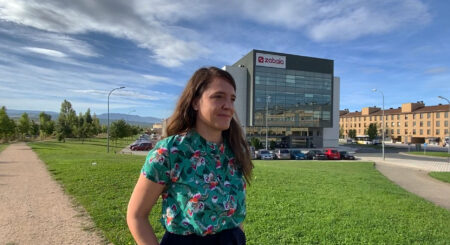
With this first chapter we are launching the series of videos starring ZABALA's knowledge area leaders. The first one will be Maite Zazpe, who has more than 17 years of experience in environmental projects

Opinion
EUROPEAN COMMISSION
Daniel García
Head of Seville office

Publication
Draghi Report
In this paper we analyse the technology and productivity gap in Europe, highlighting the recommendations of the Draghi Report and the financing opportunities for companies to maintain their global competitiveness.
The important thing is not to keep moving, but rather to know in which direction to go. Our 37% success rate proves that we know how to guide our clients.
