The Innovative Health Initiative (IHI), Europe’s public–private partnership for health research, is preparing two calls for early 2027, covering six areas of activity and with a submission deadline expected in April. The draft documents published last month outline funding for projects involving new research methodologies, personalised healthcare technologies, models of care, advanced therapies and access to medicines. These will be the final calls under the current programme. The combined funding allocation is expected to exceed €110 million, although the amount may change before final approval.
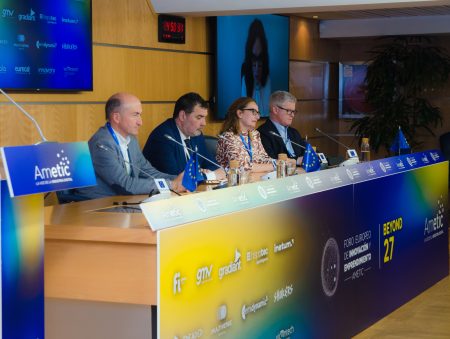
The importance of this public–private collaboration was one of the key issues highlighted at the IHI Forum 2026, held in Brussels on 20 and 21 October, which brought together more than 400 representatives from industry, research and European institutions. “It is essential to involve industry from the earliest stages of projects and to take into account both patients’ needs and regulatory requirements,” says Marina Ruilope, a consultant in the Health knowledge area at Zabala Innovation, who attended the event.
Against this background, IHI Calls 14 and 15 will follow different procedures. The former will have a single stage and require full proposals with industry partners involved from the outset. The latter will allow applicants representing the public side to submit a short proposal initially. Following evaluation, the selected consortium will proceed to a second stage, when the industry consortium designated for each area of activity will join.
Call 14 covers four areas of research
Call 14 provides for an indicative IHI financial contribution of approximately €99.5 million, distributed across four topics that are still subject to final approval. Projects will also need to secure contributions from private-sector partners.
The first topic provides up to €11 million to validate new research methodologies relevant to human biology that could accelerate drug discovery and preclinical development. One project is expected to receive funding.
The second topic focuses on personalised healthcare technologies. Around €37 million is available to validate predictive methods that could improve their clinical development. IHI has set a reference amount of up to €15 million per project and expects to select between two and three initiatives.
The largest allocation, of approximately €41 million, is earmarked for the transformation of healthcare systems. The aim is to develop integrated, patient-centred models of care that incorporate new technologies into clinical practice. Between two and three projects are expected to receive funding, with up to €15 million available for each.
The remaining €10.4 million is reserved for advanced therapies, particularly to strengthen manufacturing capabilities and prepare European clinical centres. One project is expected to receive approximately €10 million.
Call 15 focuses on access to medicines and treatment assessment
Call 15 will initially require a short proposal. The highest-ranked consortium for each topic will proceed to a second stage with the predefined industry partners. One project is expected to receive funding under each area.
The first topic seeks to establish a common European approach to the compassionate use of medicines, which allows patients with no satisfactory treatment alternatives to access certain treatments that have not yet been authorised. IHI expects to contribute between €6.5 million and €8 million over five years. The project will address differences between national procedures and the collection of data on outcomes.
The second topic focuses on the evidence used to inform treatment decisions. It aims to improve the assessment of surrogate endpoints, indicators that can help predict potential long-term clinical benefits before definitive results become available. IHI funding is expected to range from €5 million to €6 million, with an indicative project duration of four years.
For these two areas, the draft documents envisage additional industry contributions of between €6 million and €7 million and between €4.5 million and €5 million, respectively.
“Although the documents are still preliminary and may change before final approval, their publication allows organisations to start preparing their proposals in advance,” Ruilope explains. “This lead time gives both organisations with previous IHI experience and those considering participating for the first time an opportunity to analyse the topics, identify where they can add value and establish the partnerships needed to build their consortia. Starting work early will be crucial to defining each organisation’s role and ensuring that proposals are already well advanced by the time the calls open,” she adds.
The future of IHI beyond 2027 remains uncertain
The calls come as discussions continue over the future of IHI under the Horizon Europe 2028–2034 framework programme. A working document submitted to the Council of the EU in early October includes a proposal entitled Innovative Healthcare for a competitive Europe, conceived as an evolution of the current partnership.
The proposal aims to go beyond research and proof of concept through shared infrastructure, common evaluation methods and preclinical and clinical testing environments in different countries. It also envisages greater involvement of Member States and foundations in setting priorities, and seeks to facilitate the adoption of innovations in healthcare systems while strengthening the competitiveness of Europe’s health industry.
For now, this remains a preliminary proposal whose structure and scope may still change. The European Commission has also sought stakeholders’ views through a public consultation, which closed last month. Its findings will help shape future European research and innovation partnerships.
A model combining public funding and industry resources
IHI succeeded the Innovative Medicines Initiative (IMI) in 2021. One of its defining features is that it brings together organisations with very different profiles. “Participating in IHI gives all these organisations the opportunity to collaborate with leading European institutions, access complementary expertise and capabilities, and develop projects that would be difficult to undertake individually,” Ruilope emphasises.
She explains: “For hospitals and healthcare providers, it offers a way to take part in evaluating new technologies and models of care; for universities and research centres, it helps them move towards the practical application of their findings; and for pharmaceutical, biotechnology, medical technology and digital health companies, it opens up opportunities for scientific, clinical and technological collaboration.”
The programme also operates through a public–private funding model in which industry plays a central role. Industry partners must contribute at least 45% of eligible project costs, primarily through in-kind contributions such as specialist staff, infrastructure and technological resources.
“In practice, it is advisable to aim for a contribution of around 50%, which would help balance the industry contribution with the funding provided by IHI,” Ruilope suggests. These contributions complement European Commission funding, which covers all eligible costs for applicant consortia, including universities, hospitals and research centres.
By the end of 2025, the programme had reached 52 projects, while industry members and contributing partners had committed more than €660 million, according to the latest IHI in Focus annual report.