
Opinion
CLUSTERING OF PROJECTS
A shared voice in the making

Janire García
Leader of the Dissemination and Communication of European Projects area
CIRCULAR ECONOMY
Credible communication must show what has changed, how it is measured, and what still needs to improve
At a glance: the essentials of this article
Circular economy communication must move beyond broad sustainability claims and focus on evidence, specificity and transparency. For organisations involved in innovation projects, credible circularity means explaining what has changed, how impact is measured, where the limits are, and what still needs to improve.

Dissemination and Communication in European Projects
For organisations involved in innovation projects and circular economy initiatives, innovation alone is not enough. Stakeholders, investors, regulators and citizens increasingly expect clear evidence of environmental performance and impact. As a result, communicating circularity credibly has become as important as delivering it.
Every organisation wants to talk about circularity. The concept is attractive because it promises a better economy: less waste, more value from resources, longer product lives, and new business models based on repair, reuse or regeneration. This understanding is also reflected in the EU’s Circular Economy Action Plan, which frames circularity as a whole-life-cycle approach covering product design, waste prevention and keeping resources in use for as long as possible.
Circularity should not be communicated as a badge of virtue, but as a verified change in how value is created, and resources are managed. A company that says it is circular asks the public to trust an overall identity. A company that explains that a product contains recycled content, is designed for disassembly, is covered by a repair service and has a take-back scheme invites the public to examine a concrete system. One sounds impressive; the other can be checked.
This distinction matters because circularity is not a single action. Recycling can be part of it, but it is not the whole story. A product may use recycled material while remaining difficult to repair, while a reuse model may reduce waste but increase transport emissions if poorly designed. These are not reasons to stop communicating circularity. They are reasons to communicate it better.
The first rule is specificity. Avoid broad claims such as eco-friendly, green or fully circular unless the statement is clearly defined and supported. This is no longer just a matter of good practice. The EU’s Directive on empowering consumers for the green transition introduces restrictions on generic environmental claims and unsupported sustainability labels, reflecting growing regulatory scrutiny of environmental communications. The same principle is reflected in standards such as ISO 14021, which provides guidance on the use of self-declared environmental claims. A stronger message is not “our packaging is sustainable”, but “this bottle uses 50% post-consumer recycled plastic and can be recycled where PET collection systems are available”. The second version is less glamorous, but much more credible.
The second rule is proportionality. The size of the claim should match the size of the impact. If a pilot project covers 5% of production, communicate it as a pilot, not as a transformation of the whole company. If circular benefits apply only in certain geographies, say so. One damaging form of greenwashing is the halo effect: using one good initiative to make an entire organisation look more sustainable than it is.
The third rule is transparency about uncertainty. Circular systems depend on infrastructure, user behaviour, suppliers, regulation and technology. Not every outcome is under one organisation’s control. Communicators should not hide this complexity but translate it. A sentence such as “this model only delivers its full impact if the product is returned after use” can do more for trust than a page of optimistic slogans.
This approach may feel uncomfortable. Communications teams are often asked to simplify, inspire and create momentum. But in circularity, credibility is momentum. The public, investors, regulators and project partners are becoming better at detecting exaggerated claims. In fact, a European Commission screening of environmental claims found that authorities had reason to believe that 42% of the claims assessed were exaggerated, misleading or unfounded.
The issue is particularly relevant in European research and innovation projects, where circularity is a recurring objective across programmes such as Horizon Europe and LIFE. Consortia are increasingly expected not only to develop innovative solutions, but also to demonstrate their environmental impact and communicate results responsibly. This challenge is evident in projects such as CIRCUSOL, which explored circular business models for the solar energy sector through product-service systems, second-life photovoltaic modules and battery reuse, and WASTE4THINK, which showed how advancing towards a circular economy requires not only technological innovation, but also citizen engagement and behavioural change. In both cases, communicating results responsibly is essential to building trust and demonstrating impact.
The answer is not greenhushing: saying nothing for fear of criticism. Silence has a cost, because it leaves genuine innovation invisible and makes it harder for better practices to spread. As John Grant argues in Greener Marketing, the challenge is not whether organisations should communicate sustainability, but how they can do so in a way that is credible, transparent and capable of driving meaningful change.
Circularity will only become mainstream if people can understand it and trust it. That trust will not come from bigger promises or greener imagery, but from communications that are transparent about both achievements and limitations.
From our experience supporting communication and dissemination in EU-funded projects, the most credible stories are not the most ambitious-sounding ones. They are the ones that can demonstrate change, explain impact and acknowledge limitations. In the long run, the most persuasive circularity claim is not “we are circular”, but “this is what we changed, this is how we know it works, and this is what we still need to improve.”
Brussels Office
Dissemination and Communication in European Projects
Opinion
CLUSTERING OF PROJECTS
Janire García
Leader of the Dissemination and Communication of European Projects area

Opinion
Social innovation

Silvia Agrafojo
Social Innovation Knowledge area leader

Opinion
Industry

Susana Garayoa
Head of Institutional Relations in Brussels

News
EVENT
RUBIZMO and LIVERUR Final Event
Opinion
CLUSTERING OF PROJECTS
Janire García
Leader of the Dissemination and Communication of European Projects area
Publication
Regions
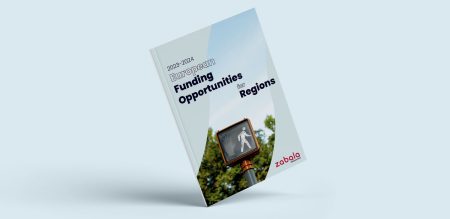
Innovation is key to making regions more digital and sustainable, and in our publication you will learn about the funding opportunities that make this possible
The important thing is not to keep moving, but rather to know in which direction to go. Our 37% success rate proves that we know how to guide our clients.
